
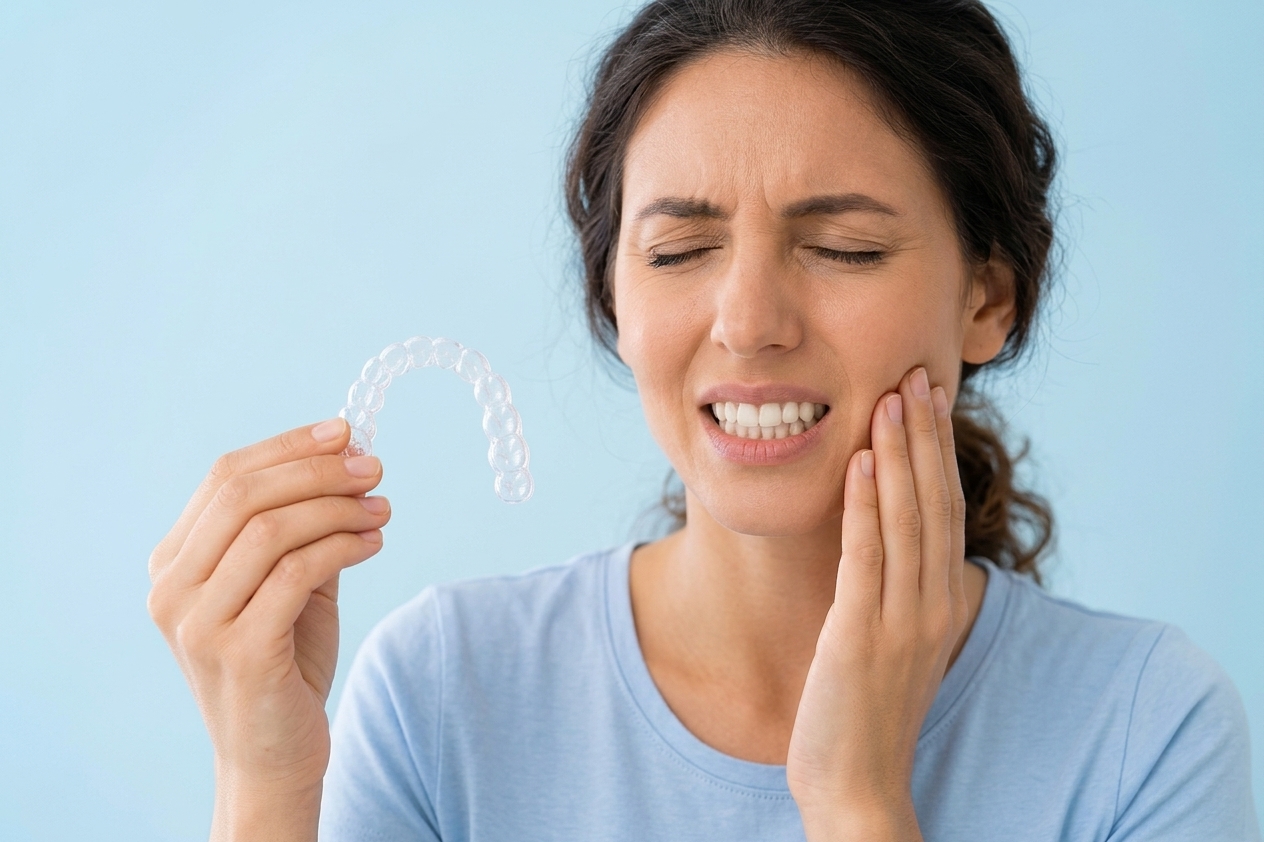
Is Invisalign painful? Yes, Invisalign can hurt a little but most patients describe it as pressure or tightness rather than pain. It’s strongest for 24 to 72 hours after each new clear aligner, especially your first one, then fades. On the other hand, clear aligners cause less early pain than traditional metal braces.
So, will Invisalign hurt you? Only a little, and not for long. Does Invisalign hurt the whole time? No, the discomfort comes in short waves, with long stretches of nothing in between.
What Pain from Invisalign Actually Feels Like
Most people describe it as tightness, as if the tray is hugging their teeth a bit too firmly. Your teeth may feel tender when you bite into something, and one or two might ache more than the rest. It’s more of a nagging, dull feeling than real pain, and it’s usually worse the evening or morning after you put in a new tray.
Why Do Clear Aligners Make Your Teeth Sore?
Each aligner is shaped slightly differently from where your teeth sit now, by a fraction of a millimetre. To move, a tooth has to shift within the ligament and bone that hold it in place. That causes mild inflammation around the root, a bit like a bruise you can’t see. The ache simply means the aligner is working.
Does Invisalign Hurt More Than Traditional Braces?
Generally, no. Invisalign hurts less than braces for most people early on and the bigger difference is where the soreness comes from.
| Invisalign | Metal braces | |
| Main cause of soreness | Pressure when you switch trays | Wire adjustments, plus brackets rubbing your mouth |
| How often it flares | 1 to 3 days per tray, every 1 to 2 weeks | Several days after each adjustment, every 4 to 6 weeks |
| Cheeks and lips | Smooth plastic, very little rubbing | Brackets and wires can rub and cause ulcers |
| Eating | Aligners come out, so no food rules | Hard and sticky foods are off the menu |
| Emergency pain | Rare, as there are no wires to break | A broken bracket or poking wire can hurt |
Does Invisalign Hurt the Whole Time?
No, Invisalign doesn’t hurt the whole time. The discomfort comes in short waves. Most people feel tightness for 1 to 3 days after switching to a new aligner, then little or nothing until the next change. The first week is usually the most noticeable, and later waves tend to be milder. The table below shows how long pain from Invisalign lasts at each stage:
| Stage | When it happens | What you might feel | Typical length |
| First aligner | Day one of treatment | Tightness, tender teeth, a slight lisp | 2 to 5 days |
| Each new tray | Every 1 weeks | Pressure, tender when biting | 1 to 3 days |
| New attachments | Usually early on | Snugger trays, rough spots on lips | A few days |
| IPR (polishing between teeth) | When space is needed | Mild sensitivity | 1 to 2 days |
| Elastics | If your bite is being corrected | Ache in the jaw and back teeth | A few days after starting |
| Retainers | After treatment ends | Tightness if you skip nights | Usually under a day |
Your First Aligner
Will Invisalign hurt most at the start? Usually, yes. The first tray is the one most people remember. Your teeth aren’t used to the pressure yet and your mouth is getting to know the plastic edges. You might lisp a little for a day or two. By the end of the first week, most of that has settled.
Every New Tray After That
Each switch brings a smaller wave of tightness that peaks within a day and is usually gone by day three. By the third or fourth tray, many people barely notice it.
Flare Ups Partway Through
Attachments, the small tooth coloured bumps bonded to some teeth, make trays grip harder for a few days. IPR, where your dentist polishes a sliver of enamel between teeth, can leave them sensitive for a day. Elastics for bite correction can make your jaw ache at first.
Refinements and Retainers
Some people need a short second set of aligners, called refinements, to polish the result. These tend to be gentler than the first round. Retainers rarely hurt at all, unless you skip a few nights and they feel tight going back in.
Pain From Invisalign: Where You’ll Feel It and Why
The pain from Invisalign is usually pressure on teeth that are moving, tender gums, or rubbing from an aligner edge or attachment. It’s most often felt in one or two teeth, the gums or the jaw, and normally settles within a few days.
One tooth hurts more than the others
Each tray moves some teeth more than others, so whichever tooth is doing the heavy lifting this round will feel it most. Sometimes it’s a tooth you didn’t expect. Go easy on it when you eat and it should calm down within a few days.
Jaw pain and headaches
A new tray changes how your teeth meet, and some people respond by clenching, often without realising. That can leave your jaw muscles tight and occasionally bring on a mild headache. Try to keep your teeth apart when you’re not eating. A warm compress on the jaw muscles helps them relax.
Sore gums
Your gums can feel tender where the tray edge sits, especially in the early weeks. Brushing gently and keeping your trays clean stops trapped food and bacteria from making it worse.
Tongue, cheek and lip irritation
A rough edge on a tray, or a freshly placed attachment, can rub and leave a small ulcer. A dab of orthodontic wax over the spot gives it a chance to heal. If an edge keeps catching, ask your dentist to smooth it rather than trimming it yourself.
Tips on How to Ease Invisalign Pain
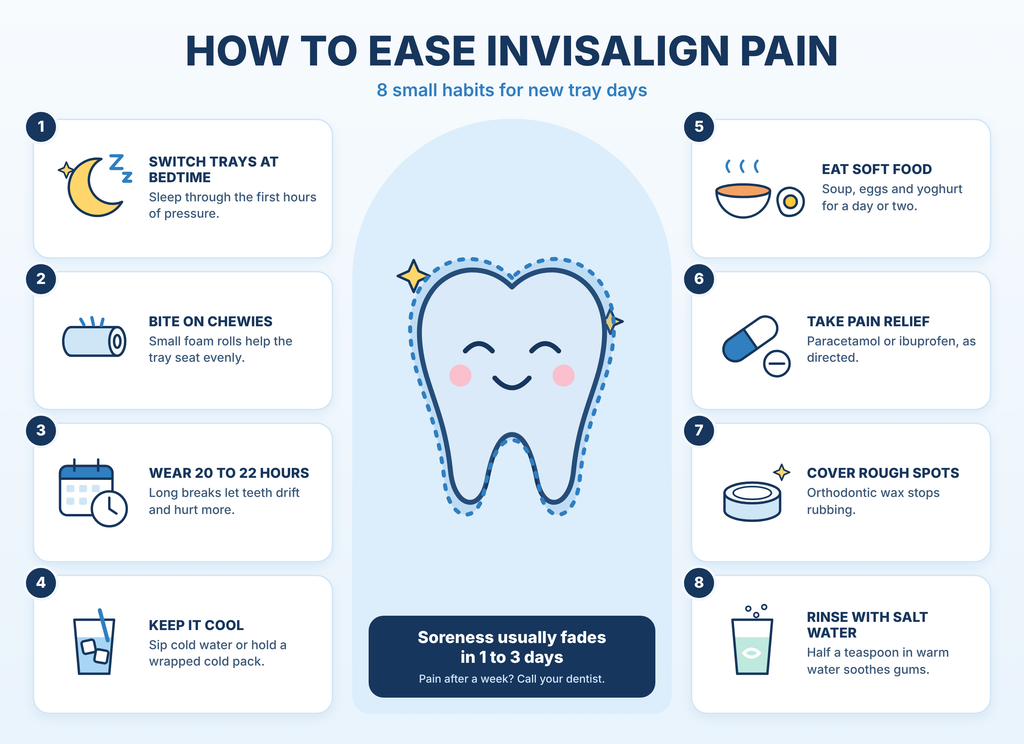
- Switch trays at bedtime. You’ll sleep through the first few hours of pressure, which is when it’s strongest.
- Use chewies to seat the tray. Biting on these small foam rolls for a few minutes helps the aligner sit evenly.
- Keep your aligners in. Aim for 20 to 22 hours a day. Long breaks let your teeth drift, so the tray hurts more going back in.
- Cool things down. Sip cold water, or hold a cold pack wrapped in a cloth against your cheek for 15 to 20 minutes.
- Eat soft food for a day or two. Soup, eggs, yoghurt and pasta are easy on tender teeth.
- Take pain relief if you need it. Paracetamol or ibuprofen, taken as directed on the packet, can take the edge off. Both work about equally well for this kind of ache, and many orthodontists suggest paracetamol first. Check with your pharmacist if you take other medicines.
- Cover rough spots with orthodontic wax. It stops an edge or attachment from rubbing while the area heals.
- Rinse with warm salt water. Half a teaspoon of salt in a glass of warm water soothes small ulcers and irritated gums.
Still wondering will Invisalign hurt in your case? Contact our Invisalign Perth provider, Dr. Colleen, who can examine your teeth and give you a realistic idea of how much pain from Invisalign to expect. You may email us or click the WhatsApp button on the right hand side if you have any questions.
Other Common Questions Related To Invisalign Pain
- Does Invisalign hurt more than braces?
Generally, no. Studies show Invisalign patients report less pain and take fewer painkillers in the first week than people with metal braces. After a few months the difference fades. Aligners also have no wires or brackets, so there’s less rubbing and fewer sore spots inside your cheeks.
- How long does Invisalign pain last after a new tray?
Usually 1 to 3 days. The tightness builds over the first evening, peaks within about 24 hours and then eases. By the time your next tray is due, the current one should feel comfortable. If soreness is still strong after a week, check in with your dentist.
- Is the first week of Invisalign the most painful?
For most people, yes. Your teeth, gums and cheeks are all getting used to the aligners at once, and you may notice a slight lisp. Later trays tend to feel milder because your mouth knows what to expect. Many people barely notice tray changes after the first month.
- Can Invisalign cause headaches?
Occasionally. A new tray can change how your teeth meet, and some people clench their jaw in response, which can lead to tension headaches. These usually ease as you adjust. If headaches keep coming back or last more than a few days, talk to your dentist.
- Can I take paracetamol or ibuprofen for Invisalign pain?
Yes. Either can help in the first day or two of a new tray when taken as directed on the packet. Research suggests they work about equally well, and many orthodontists suggest paracetamol first. Ask your pharmacist if you take other medicines or have a health condition.
- Why does it hurt to take my Invisalign out?
New trays grip your teeth tightly while they’re tender, so removing them can sting. Start at the back molars and ease the tray off gently with your fingertips, working forward. It usually gets easier within a day or two as the tray loosens slightly.
- Is it bad if Invisalign doesn’t hurt at all?
Not necessarily. Some people feel very little throughout treatment, and that’s fine. What matters is that each new tray feels snug and sits fully over your teeth. If your trays feel loose or don’t seat properly, mention it at your next appointment so your progress can be checked.
- Is Invisalign painful for teenagers or adults?
It varies more from person to person than by age. Teenagers’ teeth often move a little more easily, while some adults notice more tenderness, particularly with complex cases. Either way, the discomfort is usually mild and follows the same pattern of short waves after each tray change.