
Invisalign vs Braces: Which Is Better?
When weighing orthodontic treatments, patients often consider aesthetics, lifestyle, and clinical necessity. Both methods effectively straighten teeth and improve oral health. Hence, understanding the differences between Invisalign and braces can help you decide which option may suit your needs.
What is Invisalign?
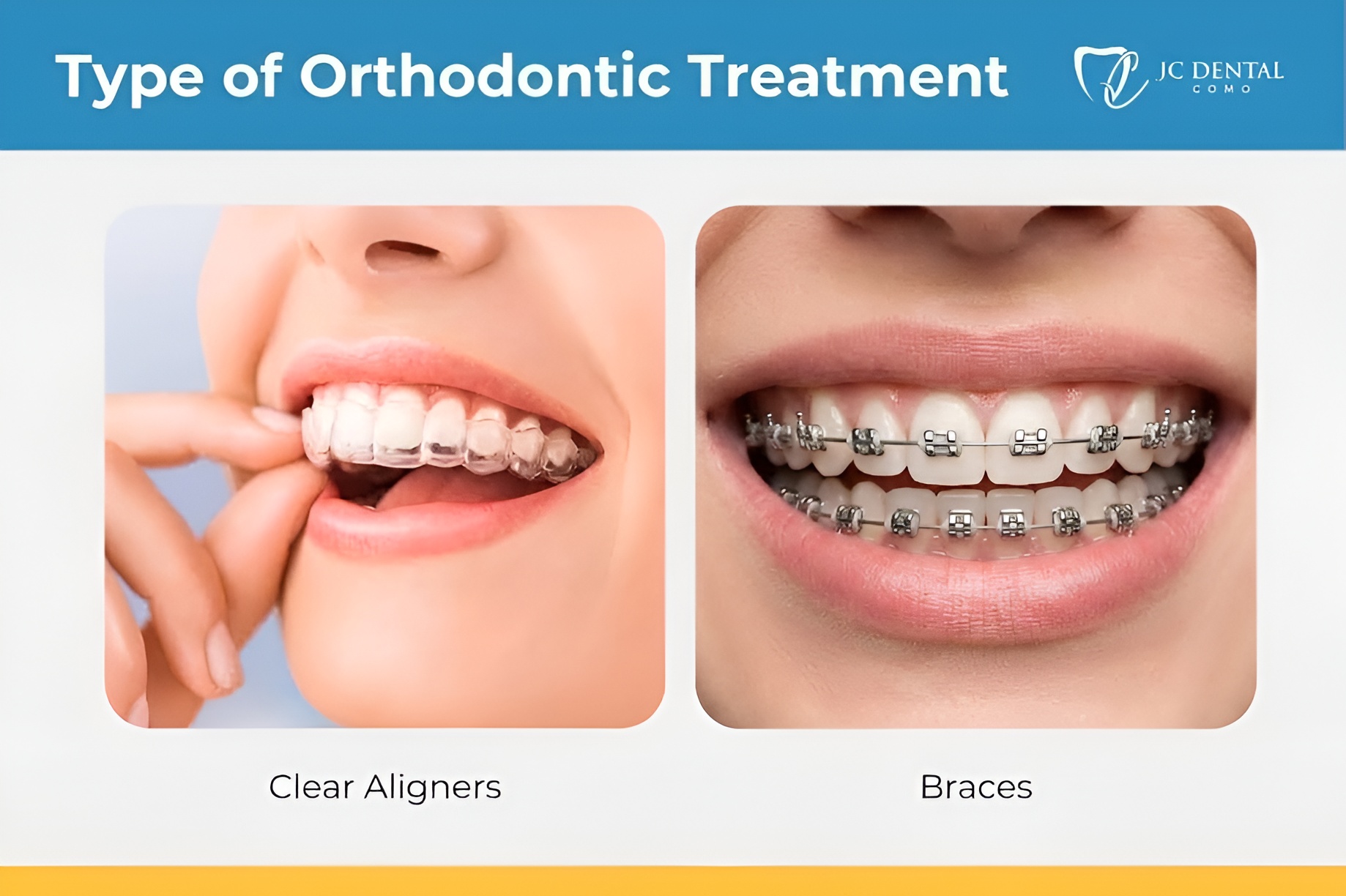
Invisalign is a modern orthodontic system that uses a series of clear plastic trays to gently shift teeth into proper alignment. Rather than utilizing fixed metal, this treatment relies on advanced scanning and custom fabrication to guide your teeth into place.
How the Invisalign system effectively works:
Invisalign offers a modern, virtually invisible way to straighten your teeth using advanced 3D digital imaging. Instead of rigid wires, the system uses a fully personalized plan to move your teeth smoothly, comfortably, and predictably into place. The clear aligner treatment relies on a few key components working seamlessly together to transform your smile:
Custom Trays:
Patients need to wear custom made shells for 20 to 22 hours every single day, changing to a new set every 1 to 2 weeks.
Smart Attachments:
The success of the treatment often involves small tooth colored composite shapes bonded directly to the teeth. They act as tiny handles, allowing the smooth plastic to grip the teeth firmly and guide complex movements.
Targeted Refinements:
Most patients will complete their initial series and then move into refinements. This is simply a small finishing set of aligners used to perfect the final smile and correct any tiny differences between the digital plan and reality.
Benefits of Invisalign
- Nearly invisible transparent plastic makes them incredibly discreet for professional environments
- Smooth plastic materials make you comfortable and prevent painful cuts and sores inside the cheeks and lips
- Removable nature allows you to enjoy a normal diet without fear of breaking brackets
- Shorter treatment time, requiring only 6 to 18 months
What are Braces?
Traditional braces, consist of metal pieces permanently bonded to the front of the teeth and connected by arch wires. A dentist adjusts and tightens these wires periodically to pull teeth into their correct positions.
The main components and processes include:
- Fixed Brackets: Metal or ceramic pieces glued directly to the surface of each tooth.
- Connecting Wires: Thin metal wires that thread through the brackets to apply steady pressure.
- Regular Adjustments: Appointments scheduled every 4 to 12 weeks to tighten the system and force the teeth to move.
Benefits of Braces
- Highly versatile and fully capable of fixing the most complex dental issues
- Remains affixed to your teeth, ensuring the treatment progresses without relying on your memory
- No need to constantly remove or keep track of plastic trays during meals or snacking
Head to Head Comparison for Invisalign and Dental Braces
| Invisalign | Traditional Braces | |
| Appearance | Virtually invisible | Quite noticeable |
| Comfort | High level of comfort | Metal ends can cause irritation |
| Removability | Fully removable | Not removable at all |
| Treatment Time | From 6 to 18 months | From 1 to 3 years |
When evaluating dental braces vs Invisalign, understanding how they impact your daily life is crucial. While clear aligners dominate in comfort and appearance, fixed appliances still hold important clinical advantages. Examining the two methods shows clear winners in specific categories based on patient needs.
Comfort and treatment time are two common considerations when comparing the options. Clear aligners are generally comfortable to wear, although some pressure or soreness is normal when switching to a new set.
Treatment time varies by case, but many cases with clear aligners can be completed within 6 to 18 months, while treatment with braces may take longer. Regarding finances, advanced manufacturing has brought both options into a very similar price range, making cost a tie for most patients.
Invisalign vs Braces Results: Which Is Faster?
When evaluating is invisalign better than braces, clear aligners typically achieve complete results faster for mild to moderate crowding or spacing, often finishing treatment in 6 to 18 months. On the other hand, Traditional braces handle severe structural corrections faster by applying continuous, multi-directional force without depending on patient compliance.
How Many Cases Can Clear Aligners Actually Treat?
A common myth is that Invisalign only fixes minor gaps. Nowadays, advanced attachments and sophisticated treatment planning software mean far more cases qualify for clear trays than people assume. When reviewing the clinical results of both methods, you will see that clear trays successfully handle many issues.
Clear aligners successfully resolve:
- Mild to moderate crowding of the upper and lower teeth.
- Unwanted spacing and large gaps between teeth.
- Moderate overbites and underbites that require correction.
- Relapse from previous orthodontic work that shifted over time.
The debate of Invisalign versus traditional braces often concludes when patients realize clear trays can handle their specific bite issue. However, some complex movements or orthodontic cases may still be better managed with fixed appliances. Heavy root movement, closing large spaces left by extracted teeth, and treating severe cases of jaw misalignment generally require the steady pulling force of fixed brackets and wires.
Invisalign vs Braces: Lifestyle Advantages
Choosing between braces or Invisalign requires looking at your daily routine. The lifestyle convenience of clear trays is a massive selling point. While fixed appliances do offer the reliability of being completely nonremovable, this single benefit rarely outweighs the freedom provided by clear trays. You can easily navigate professional environments, social events, and sports without feeling self conscious.
Here are the top lifestyle advantages of Invisalign:
Fewer Diet Restrictions:
Enjoy most of your favorite foods simply by taking the trays out before your meal.
Fewer Urgent Visits:
You are far less likely to need an urgent dental appointment to fix a snapped wire or broken bracket.
Event Ready:
You can safely remove the trays for important presentations, weddings, or taking professional photographs.
Sports Safety:
Removing the plastic trays during contact sports helps prevent cut lips and damaged orthodontic equipment.
The Verdict: Is Invisalign better than braces?
For the majority of people considering either option, Invisalign is an excellent choice. When comparing dental braces to Invisalign, clear aligners provide comparable speed and similar financial investment while putting you far ahead in comfort, appearance, and daily convenience.
If you are ready to transform your smile, your next step is easy. Visit our Invisalign Perth page and book a consultation with us!